Page type: Source-led referenceChecked: 10/9/2026Certainty: Use the cited source and build label
All Guides
Warhammer Survivors Status Effects: Oil, Fire and Poison
Compare Warhammer Survivors status effects in Auroch's official video: Burning versus Poisoned, Nuln Oil fire synergy, Death Guard poison, and Frenzon.
10/9/2026 Pre-release preview Last updated: 10/9/2026 4 min read
FAQ
What is the difference between Burning and Poisoned?
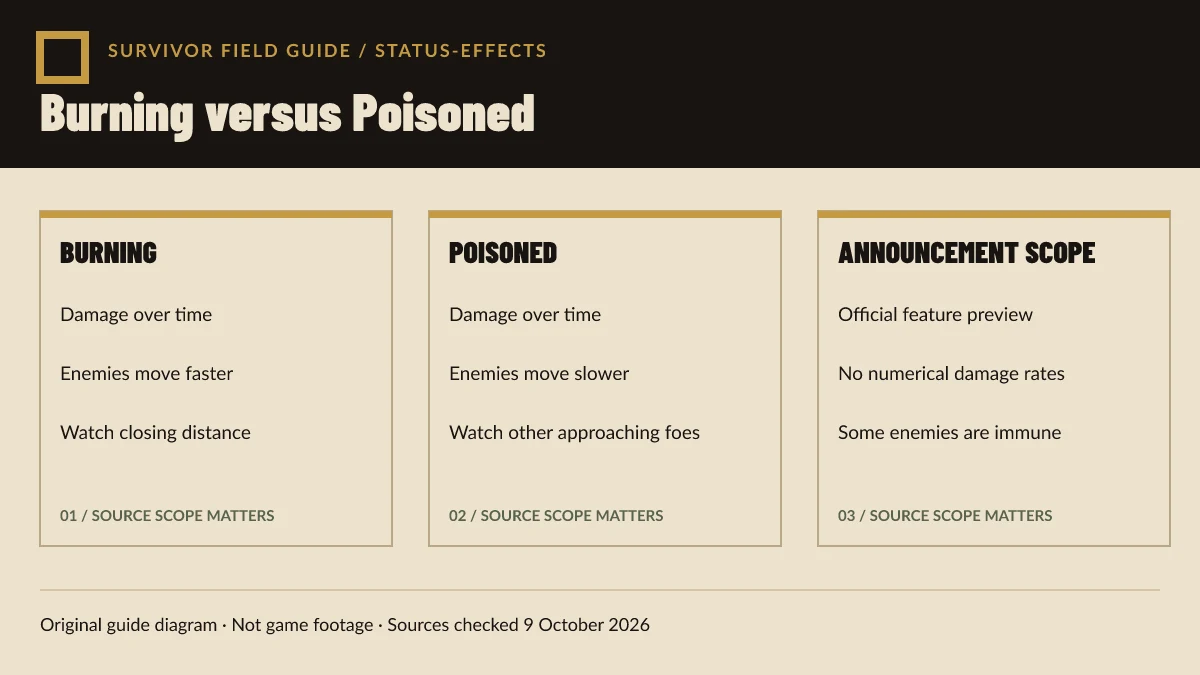
Both inflict damage over time. The official preview says Burning increases an affected enemy's movement speed, while Poisoned slows the enemy down.
What does Nuln Oil do?
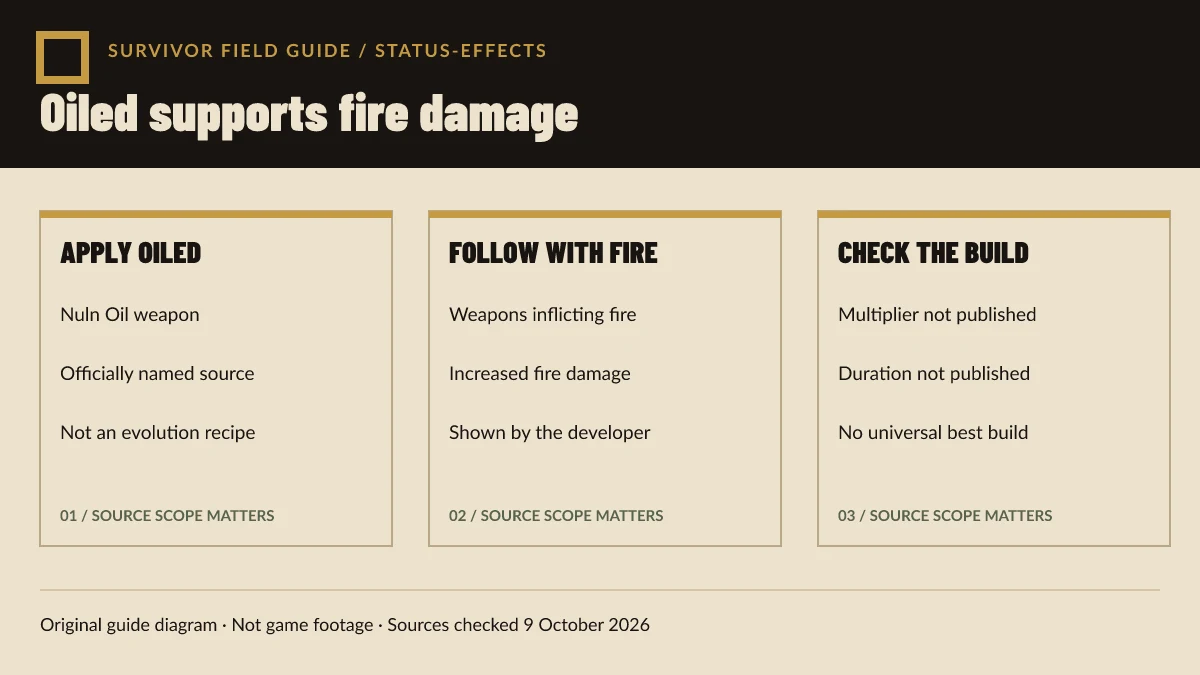
Auroch identifies Nuln Oil as a weapon that causes Oiled. That status increases damage from weapons that inflict fire damage; this is a damage interaction, not an announced evolution recipe.
Can status effects affect the player?
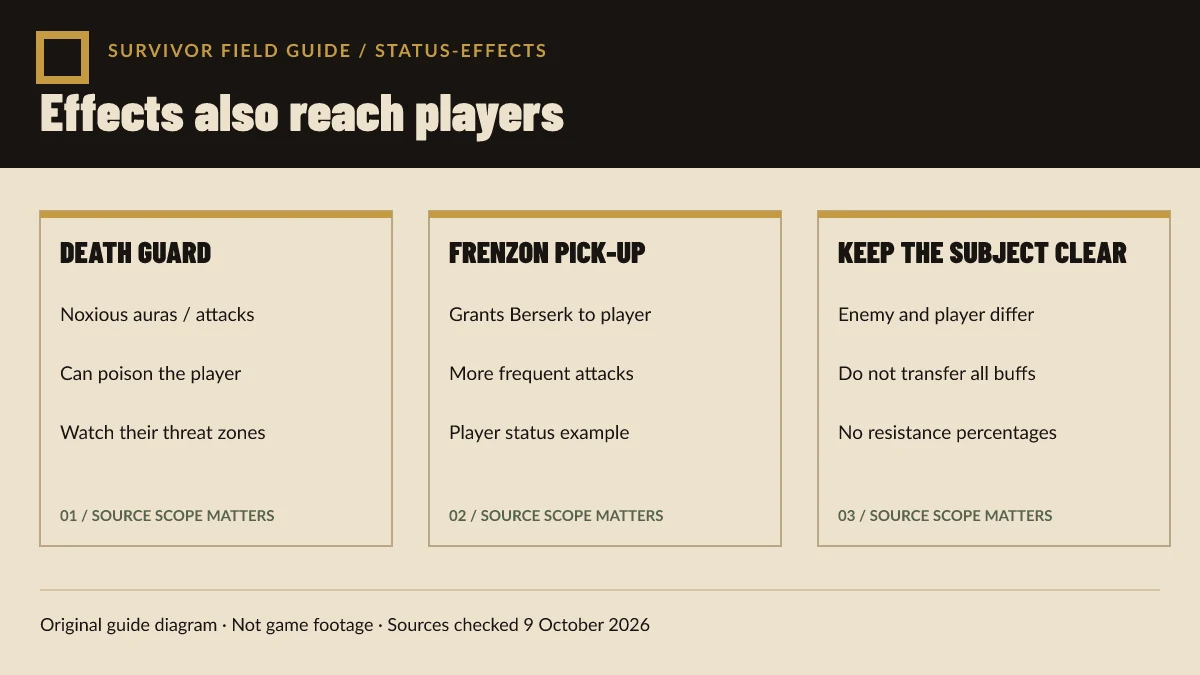
Yes. Auroch demonstrates harmful and beneficial player effects, including Death Guard poison and Berserk granted by the Frenzon pick-up.
What does Frenzon's Berserk effect do for the player?
The official preview says Frenzon grants Berserk and increases the frequency of the player's weapon attacks. It does not publish a numerical attack-speed increase or duration.
Can every enemy receive every status effect?
No. The official announcement says some enemies are immune. It does not give a complete immunity table, so an effect demonstrated on one enemy should not be treated as universal.
What do the announced status effects change?
They can change damage, movement, or attack frequency, and can affect enemies or the player. Burning and Poisoned differ in movement even though both cause damage over time. Oiled connects Nuln Oil to fire damage. Those distinctions give you a useful way to read an encounter before making any claim about a best build.
Source: Auroch Digital, Feature Focus: Status Effects, August 5, 2026. The matching Steam announcement supplies the exact effect and weapon names. These are official pre-release demonstrations, rather than an independently tested October Demo or November release-build effect table. The illustrations are original diagrams; game footage remains in the source video.
Auroch Digital — Feature Focus: Status Effects (August 5, 2026)
How do I interpret the three examples?
1. Read movement as well as damage over time
Burning and Poisoned both wear down affected enemies over time, including the tougher enemies discussed by Auroch. Their movement changes differ: a burning enemy moves faster, whereas a poisoned enemy moves slower. Do not assume that every damage-over-time effect also gives you more distance. Watch the affected enemy's approach, and remember that the announcement says some enemies are immune.
Nuln Oil causes the Oiled status. Auroch explains that Oiled increases damage from weapons that inflict fire damage, and pairs it with the Burning example in the video. This gives you a concrete interaction to recognize when reading weapon descriptions. It does not establish a particular evolution, required passive, optimal loadout, damage multiplier, or the final release balance.
3. Distinguish harmful player effects from Frenzon
The Death Guard can poison the player through noxious auras or attacks. Frenzon demonstrates a beneficial case: collecting the pick-up grants player Berserk and increases weapon-attack frequency. Keep the affected subject clear when reading these effects. The player benefit described for Frenzon and the enemy buff described for Tyranid Synapse have different stated consequences; the name alone does not supply every property.
The developer does not publish complete durations, tick rates, stack rules, or immunity lists in this feature. A useful next check in your own build is to read the weapon or pick-up description and record the affected subject, exact status name, and observed consequence. Preserve the build and platform with that observation.